Israel and Settler Society by Lorenzo Veracini
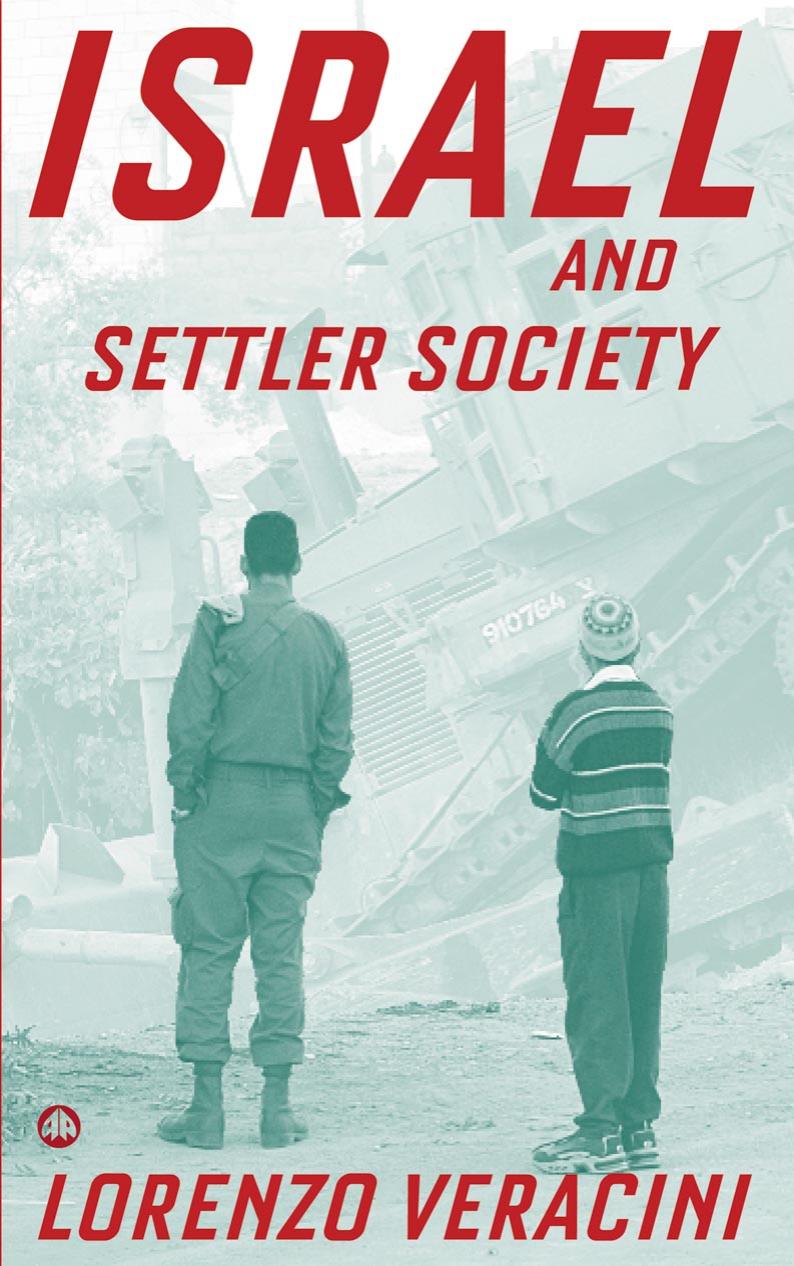
Author:Lorenzo Veracini [Veracini, Lorenzo]
Language: eng
Format: epub, pdf
Publisher: Pluto Press
Published: 2006-01-19T18:30:00+00:00
5
Conclusion: Imperial Engagements and the Negotiation of Israel and Palestine
In French Algeria and apartheid South Africa, it was the shifts in US sensitivities that ultimately produced change, and a similar argument could be made for Australia, since it was the example of the US that, beginning from the late 1960s, created the conditions for an essential shift in public attitudes.1 Pessimistically, however, one should point out that South Africans had to wait the end of the Cold War before a process of bi-national reconciliation, devolution, and the initiation of a degree of power-sharing. As well, while France negotiated an Algerian independence only after the breakdown of the institutions of the Republic had become irreversible, one should point out that in Australia the Aboriginal reconciliation process remains unfulfilled. Israel/Palestine may need to wait for the end of the permanent global âwar on terrorâ and/or a full-scale attack on the democratic institutions of the Israeli state before the situation could become unstuck.
In this context, narrative, representation, perception and especially the interpretation of the conflict in the US, become essential.2 True, contrary to other colonial enterprises, Israel could not count on a colonizing metropole; however, the acceleration of coloniality that accompanied and followed the Oslo process â its current colonial circumstances â is certainly not occurring in a vacuum of empire. Inevitably, an appraisal of Israeli colonial circumstances needs to refer to a re-emerging colonialist sensitivity in the US. A diversion is needed: to negotiate Israel/Palestine, one needs to look at America.3
Israel/Palestine and US suburbia are linked. Besides oil, a necessity of âredesigningâ the whole of the Middle East should be interpreted in the light of the extent to which a specific version of settler consciousness has become strategically located in US public and administrative perceptions. âAmericaâs Last Tabooâ, the unquestioning and automatic US support for Israeli actions in the Occupied Territories, could then be seen as an outcome of a settler consciousness appeased by âfrontierâ images of a pioneering enterprise (as well as by the influence exercised by the Zionist lobby on Washington).4 The pro-Israel lobby is obviously a tremendously influential factor, but, more importantly, one needs to identify the cause of such strength, and move beyond an almost conspiratorial capacity (besides, this approach would risk reproducing overtones of a traditional anti-Semitic stereotyping). A settler-determined constituency and the availability of a settler world-view is one factor that can help explain US support for Israeli policy in the Occupied Territories: the argument of those commentators who insist on the pervasive influence of the pro-Israel lobby in shaping US Middle East policy should be integrated with an appraisal of how crucial the discursive practice of an Israeli settler project has become in the US.5
It is the location of a specific settler imagination that should be highlighted: US policy is not biased in favour of Israel because of the pro-Israel lobby; rather, the pro-Israel lobby can be so influential because of a settler-determined consciousness of a specific republican tradition.6 The paradigmatic shift from a âpeace
Download
Israel and Settler Society by Lorenzo Veracini.pdf
This site does not store any files on its server. We only index and link to content provided by other sites. Please contact the content providers to delete copyright contents if any and email us, we'll remove relevant links or contents immediately.
The Secret History by Donna Tartt(19034)
The Social Justice Warrior Handbook by Lisa De Pasquale(12183)
Thirteen Reasons Why by Jay Asher(8885)
This Is How You Lose Her by Junot Diaz(6873)
Weapons of Math Destruction by Cathy O'Neil(6261)
Zero to One by Peter Thiel(5784)
Beartown by Fredrik Backman(5734)
The Myth of the Strong Leader by Archie Brown(5495)
The Fire Next Time by James Baldwin(5426)
How Democracies Die by Steven Levitsky & Daniel Ziblatt(5211)
Promise Me, Dad by Joe Biden(5141)
Stone's Rules by Roger Stone(5080)
A Higher Loyalty: Truth, Lies, and Leadership by James Comey(4947)
100 Deadly Skills by Clint Emerson(4915)
Rise and Kill First by Ronen Bergman(4776)
Secrecy World by Jake Bernstein(4739)
The David Icke Guide to the Global Conspiracy (and how to end it) by David Icke(4697)
The Farm by Tom Rob Smith(4501)
The Doomsday Machine by Daniel Ellsberg(4482)
